
Bali has evolved from a seasonal tourism market into a year-round lifestyle destination. Remote professionals, lifestyle migrants, and long-stay travelers have permanently reshaped demand, and the investment landscape with it.
The forces reshaping the market
Several structural forces support long-term demand in Bali real estate, independent of short-term tourism cycles:
→ International tourism recovering and growing beyond pre-2020 levels
→ Digital nomads and remote professionals seeking long-stay bases
→ Lifestyle-driven migration from high-cost markets in Asia, Europe, and Australia
→ Limited prime land supply in established coastal and cultural zones
→ Rising construction costs continuously inflating replacement value
The market is no longer driven only by short-term tourism cycles.
Prime areas vs Emerging zones
Not all growth is equal. Understanding the trade-offs between established and emerging zones is fundamental to portfolio positioning.
Prime ZonesESTABLISHED · LIQUID · LOWER RISK→ Stronger rental demand → Higher nightly rates → Better resale liquidity → Lower volatility | Emerging ZonesUPSIDE · PATIENT CAPITAL ONLY→ Lower entry prices → Speculative potential → Infrastructure dependent → Higher execution risk |
Experienced investors balance exposure rather than chasing one extreme. Fundamentals in prime zones compound quietly; emerging zones reward patience and higher risk tolerance.
Three markets, three profiles
Each area attracts a distinct buyer and guest type. Matching asset design to location profile is critical for rental yield and resale liquidity.
CangguSHORT-STAY & LIFESTYLEHigh short-term rental demand Design and brand critical Competitive, dynamic market | UluwatuLUXURY & ARCHITECTURELonger average guest stays Lower occupancy volatility Clifftop and ocean premium | UbudWELLNESS & RETREATDistinct seasonality Strong niche guest loyalty Low noise, high repeat visits |
A market that has grown up
Buyer sophistication has increased markedly. Tolerance for informal builds, vague contracts, and opaque financials has fallen sharply. Buyers entering today expect:
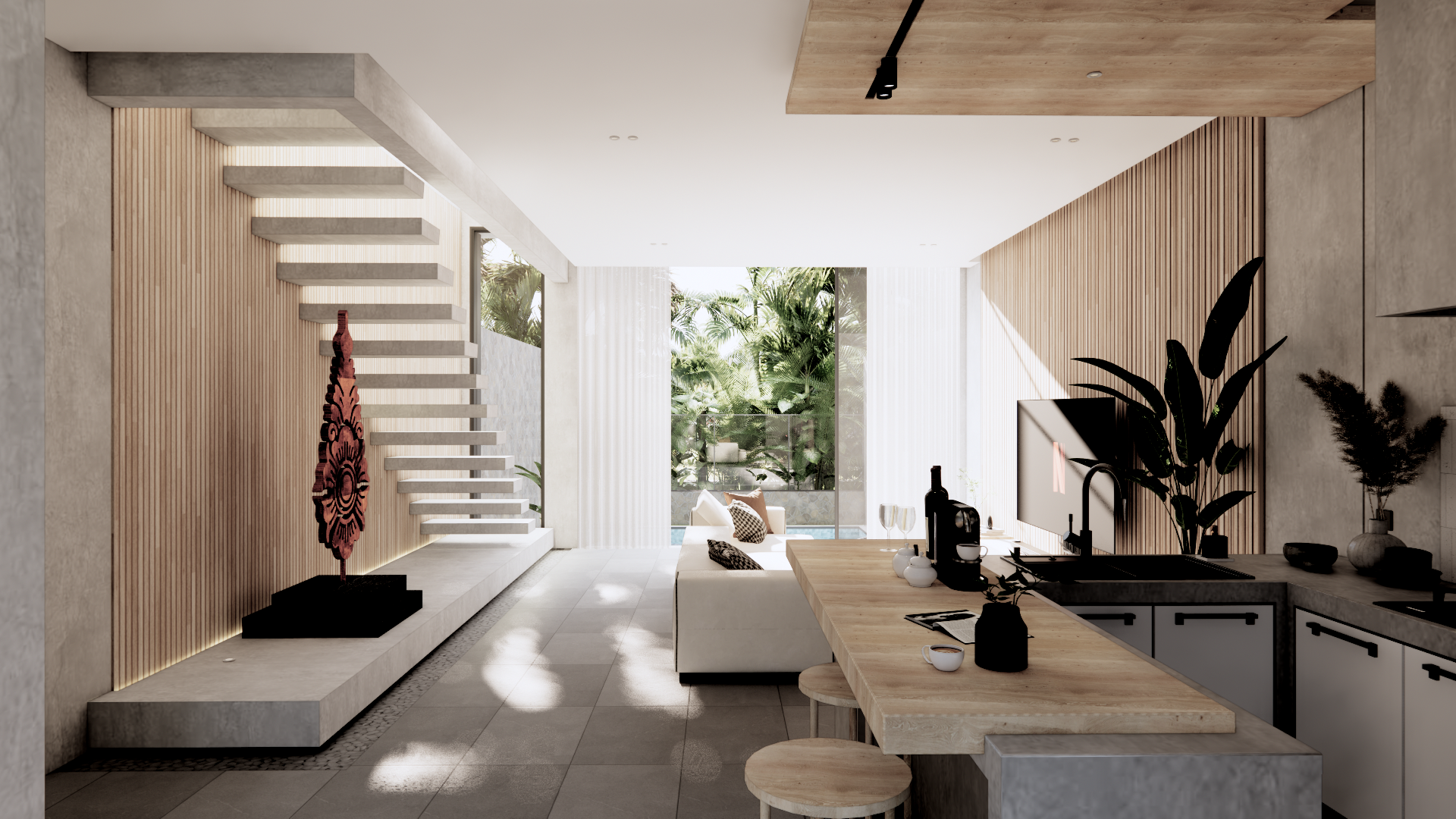
→ Clear, independently verified legal structures
→ Transparent financial modeling with conservative assumptions
→ Operational readiness from day one, management in place before handover
→ Proven developers with documented track records
Construction costs have risen steadily, labour, materials, and quality expectations all substantially higher than five years ago. Existing well-built villas benefit directly from replacement cost inflation.
Signals every investor should monitor
01 | Infrastructure | Road, airport, and utility expansion signals zone maturation and rising land values. |
02 | Zoning | Enforcement tightening protects prime assets from low-quality oversupply. |
03 | Regulation | Rental policy clarity reduces operational risk and attracts institutional capital. |
04 | Differentiation | The quality gap widens, generic villas increasingly underperform against designed assets. |
05 | Tourism Mix | Source diversification reduces single-market dependency and smooths seasonality. |